
Risk and Reward
"Why Smart People Make Stupid Decisions" - Jan Frodeno

TL; DR
-Risk taking in competition is a different calculation to risk taking in training
-Learning from experience is hard, many athletes repeat the same mistakes over and over
-Chasing the 99.9% is a high risk approach that is likely to result in catastrophic problems
-Getting to the start line healthy and ready to compete is the critical part of effective preparation
-You can’t win if you can’t start the race!
-Focusing on getting the basics right: the 95% is what drives even the top performers to consistently deliver to their potential
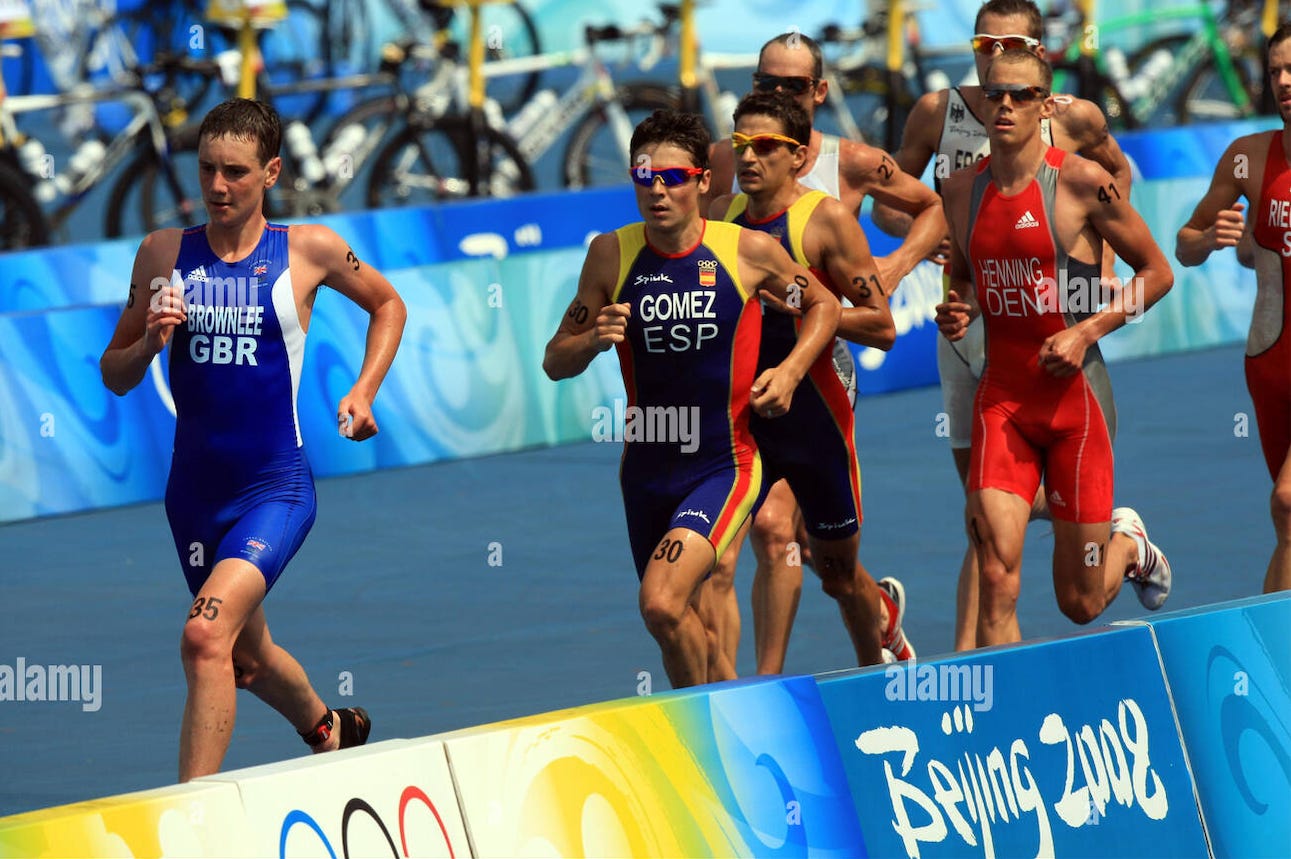
The premise of Jan Frodeno’s new podcast series “Going Mental” is about exploring the mental side of high level sport, and where the differences may be between athletes’s approaches, reflections and mistakes they have made, and what can be learned from top performers. Jan’s newsletter associated with the podcast is also a good read and fills in his thoughts on each episode.
Much can be learned from these kinds of big picture reflections - both how champions reflect on their experiences, and in particular where they feel they made mistakes and what they might have done differently. I’ve made a lot of mistakes in my coaching career, and these have been formative for me in refining my process to learn from and avoid making the same kinds of mistakes again with other athletes.
The first episode of Going Mental with Alistair Brownlee was a though provoking one for me - two Olympic Champions reflecting on their approaches - both having achieved the pinnacle of performances in triathlon. And also had a personal angle for me, as I’ve coached athletes who competed against both at their primes, as well as spent time in Leeds with the Brownlees when I was working with British Triathlon from 2009-2011, and have some personal experiences and insight into their processes up front.
Before going further - much respect to both Jan and Alistair for what they have achieved, for how they share their experiences and give back to the sport today. My reflections prompted by their conversation are not at all criticism, and instead are about how I was inspired to share how my own experiences and observations connect to my coaching work on a daily basis from these learnings.
The Mental Edge
Often it’s said that the difference between champions and everyone else is more mental than physical - but what does that mean in practice?
Of course elite physical genetics are table stakes for top sport performances. But there are two sides of effective mental skills in performance - how athletes manage the competition environment, and how they manage the training and preparation process.
Effective mental skills in both training and racing results in better decision making, and that makes the differences in performances, beyond just physiology.
Going Mental in Competition
In competition Alistair was undoubtedly one of the best ever - racing with confidence, assertiveness and willing to take risks. At his best he was known for pushing the swim to bike breakaways, and being willing to work very hard doing so - something that many of his competitors were unwilling or unable to do.
Racing with confidence and assertiveness can be hard to coach (in particular in short course triathlon; the risks in long course are much higher and focusing more on yourself is a better strategy for most). Some athletes being more natural tendencies towards confidence (often unearned). Others need more objective evidence and coaching to build their confidence.
The best athletes have an ability to put themselves where in the right position, in order to be successful. When you know you can win, you behave differently in competitions. This confidence can either come from past experiences (demonstrating this ability to win), or ‘faking it until you make it’, which can be surprisingly effective in many scenarios, despite the potential to bump into the reality of fitness and conditioning eventually.
One of the most impressive performances I recall from Alistair was when I was working with British Triathlon in 2010. At the time I was visiting Leeds every week, usually for the Tuesday track sessions. Coming off his first World Senior title in 2009, Alistair picked up a stress fracture over the winter. He was forced to skip the first races of the 2010 season, but decided to line up for his first series race in Madrid in June. However he had still done relatively little run training, and while he was back running, he had hardly done any run sessions yet.
What followed in Madrid was a dominant win, that from his preparation alone he had ‘no right’ to win, and yet he imposed himself on the field, and in my view won due to his mental strength, confidence and assertiveness to make the race happen how he needed for him to win. While he said he didn’t expect to win in Madrid, the way he raced showed his confidence in himself and his willingness to take the risk on the day that he might blown up and creep to the finish line instead. Others coming from the same lead in post injury might have taken a more conservative approach and ‘see what happens’ vs the confidence style with which Alistair raced.
Another example from Alistair’s mental approach in racing was London 2010, where he pushed himself in the limit on a relative hot day for London and ended up collapsing at the finish, blacked out and later woke up in the hospital, having suffered from heat stroke. Most athletes would have stopped before getting to the stage Alistair did on the day, again demonstrating his ability to push himself to the limit in racing, sometimes to his own detriment.
I recall in the aftermath his collapse in London, discussing how he might deal with the heat in the future. It was proposed that he might need to alter his approach in these hotter environments in the future to avoid the same happening again. However this idea was shot down, as fundamentally Alistair’s ability to push himself to the limit was a big part of why he was successful and who he was as an athlete and person. Changing that approach wasn’t desirable or even possible, while maintaining his ability to perform at his best.
One of the principals of coaching is accepting people for who they are, recognising some qualities can be coached and changed, and some qualities are just innate. Many of the qualities that lead to great successes also have a dark side that must be managed so that the athlete can avoid self destruction.
Going Mental in Training
On the other side, many of the same qualities that can be powerful and effective on the field of play, can be self-destructive in the training environment.
In this part of the conversation between Jan and Alistair, I found a contrasting narrative that we sometimes see in high performers:
“I would feel it’s an aberration if I got to the Olympic start line at 95%. That’s not what I’m here to do. I’m here to get there at 99.9%. And of course, if I go to 101%, that’s part of that parcel.” - Alistair Brownlee
The difference between 99.9% and 101%? That’s not a podium position. That’s a stress fracture. A torn muscle. An entire season gone. That’s lying on a physio table wondering if you’ve just ended your career chasing a fraction of a percentage point that doesn’t actually exist. - Jan Frodeno
As Jan notes above - chasing the extra percentage can end up in catastrophe, potentially resulting in being unable to compete at all due to injury, or under-performance due to over training in preparation.
Does this extra percentage even exist?, and how should we think about the risks in chasing this percentage vs the potential for it all to end in tears?
I discussed the phenomenon of chasing confidence and ego driving training behaviours in the “Don’t be a January Champion” article. Avoiding the trap of pushing too hard, and taking unnecessary risks is critical to get right for athletes and coaches to achieve their best when it matters most.
Another possibility beyond injury, is simply being over-cooked come race day - as described in the Championship reflections article. It happens frequently - athletes who say they felt ‘flat’ in the race - often from doing too much in the lead up and then not having time to absorb that work before race day. Or they just were not able to push as hard as they expected they would from training, often indicated the ‘best performance’ was left in training, and not accessible on race day.
We know a big part of performing at the top levels is arriving the goal races healthy, and with energy to compete at your best levels, so you can fully express your potential.
Even on the biggest stages, often what’s required is not a personal best performance, but instead being able to reproduce what you have done before in competition, but under the additional stress and pressure of a championship. Yes the level of competition and the overall event can push competitors on towards world records and season best performances. But in many cases the real requirement is to be able to deliver the performance predictably and reliably under pressure.
And that performance under pressure equally applies to the training process. Letting the pressure get to you can manifest itself in taking too many risks in training and riding the limits for too long.
In practise trying to extract everything out of the training process can mean treading the red line between recovery, absorption, or even survival of training. Injury, pain and being unable to either do the training required, or compete are frequently the result of this kind of thinking and behaviours.
Taking risks in training can show up in any number of ways: not listening to your body when you have pain, or niggles that persist. Not paying attention when fatigue gets too deep, when the RPE of efforts is higher than expected. When sleep or appetite is reduced, or adversely affected. Not fuelling enough in efforts to change body composition while under high training load. It looks like doing one or more reps too many, or going faster or harder than necessary. Trying to prove to yourself that you are ready to compete. It looks like increasing the training progression too quickly, doing too much too soon in the build. It could be pushing through when sick or ill, or trying to come back to load too quickly following a setback.
Injuries are not an inevitable part of the performance process. We do everything we can do avoid injuries, even if they still can happen despite the best intentions and processes to support training, decision making, recovery, nutrition and medical support.
Injuries are not just about the short term consequences of the injury in the moment. There are also the long term consequences of missed training, the rehab and re-building process that takes roughly double the healing time, and the potential to end up in injury cycles, as layers of compensation can accumulate, resulting in secondary or tertiary issues that repeat the pattern.
Indeed both Jan and Alistair acknowledged that a number of times they got this calculation wrong and were forced to sit on the sidelines.
Success leaves clues, but unknowns remain
Of course one could make the case that both Jan and Alistair’s remarkable successes could be attributed to their risk taking approach, and they knew and accepted the potential fall out of pushing past their limits. And indeed much like Alistair’s in-competition mental strength, perhaps he wouldn’t have been successful any other way.
From a learning perspective, we can’t know an alternative timeline of what could have been achieved with a different approach. What performances may have been left on the table? How much more could they have won with a different approach? We don’t know the answers to these questions, but zooming out, what can others learn from these experiences and apply to their own contexts?
One thing I have seen many times over the years is athletes who have left a lot of performance on the table unachieved. For all different reasons, some out of their control, and many times as a result of their decision making. Many of the best athletes have walked the line of both amazing performances, and self sabotage and self destruction. People with character traits to be among the best performers often struggle to find that balance of being at their best, or being broken, either physically, mentally or both. Finding that right formula is indeed is part of the game at the top levels of sport.
The hidden costs of chasing gold - perspectives from Non Stanford
On the All In podcast with Aaron Royle and Jelle Geens, Non Stanford reflected on her career progression, and the often challenging experiences from the pursuit of her best performances. As an aside, it’s super interesting for me to listen to formerly coached athletes - in this case all three on this episode. As a coach you often don’t know what messages and lessons get absorbed, and what don’t. The role of the coach is often to take decision making fatigue off the shoulders of the athletes, so it’s not a given that they understand the reasons behind what they did or didn’t do in training and preparation in their own careers.
Non reflected on her pursuit of a similar philosophy to what Alistair and Jan discuss, and how pushing towards the 99.9% of performance optimisation led to significant injuries and at times under-performances in the first stages of her career.
While Non achieved some remarkable performances including being crowned World Champion in 2013, she also described the cost of this approach for herself and many of athletes around her in Leeds. She talks about how she went from tolerating the high volume and overall load to physical breakdowns, multiple injuries, and dealing with the mental fallout of feeling she went into the Rio Olympic Games over trained and overcooked, and yet having come so closer to a medal with 4th place, and was left wondering what could have been. Another aside, I have worked with a number of Olympic 4th place finishers (five in total, not necessarily coaching them into that position, but dealing with the aftermath) and each of them struggled with the ‘chocolate medal’ position.
The interview with Non presents an interesting contrast to the Jan / Alistair discussion, in particular now that Non has moved into a coaching role and is working her on integrating her own career lessons into guiding and coaching others, hopefully to avoid some of the more challenging experiences of her own career.
Non reflected that the biggest lessons she took away was to reject the 99% vs 101% framework, and instead focus on being consistent at “95%” instead of gambling on the 99%.
The responsibility of coaching really puts into focus the need to transform experiences into more effective decision making and Non’s reflections show a perspective that top performance doesn’t have to be all or nothing (despite the name of the podcast she’s interviewed on!), and that alternative philosophies may be wise in the big picture.
Conclusion
Both conversations reveal insights into how champion athletes reflect on their journeys to the top of the sport, the decisions they made, lessons learned, and trying to make sense if they followed the right path to achieve the best from their careers.
As to “why smart people make stupid decisions” - Jan’s subheading to the interview with Alistair - achieving the best possible performances is hard, and there is no calculator or even precision in the process - it’s easy to fall into the trap of chasing confidence and letting ego drive decision making.
For most athletes, pushing too hard and taking risk in training is not the right approach. The costs of getting it wrong are too high. And top performances don’t demand or require a perfect process - most athletes don’t even arrive on race day having the 95% in the bank, never mind riding the 99.9% line.
Practical tip: practise leaving a buffer your training load - it’s not always easy to quantify what the limits may be, but I find the goal to always finish your training with one rep in the bank that you didn’t use to be a wise one, and that extends to the big picture as well.
Create space in your planning to perform at your best when it matters the most.
Recent Updates:
Zone 1 is where the magic happens article + Podcast + Youtube video
Progression: A powerful training heuristic article + Podcast + Youtube video
Don’t be a January Champion article + Podcast + Youtube video (NB I recently fixed an audio issue affecting the first few minutes of this audio podcast and youtube video)
Championship Reflections article + Podcast + Youtube video
Follow the JFTcrew squad’s new instagram account JFTcrew
How to show your support:
Subscribe to the Real Coaching podcast:
If you’ve found value from my work, consider becoming a paid subscriber
“Champions are all around us, all you have to do is train them properly ”
— A. Lydiard
Personal Coaching for Triathletes
Coaching - For highly ambitious and experienced athletes who are looking to seek the best possible guidance to improve their performances.
Consulting - A thorough consultation and review of your programming, periodisation or other topics that will help you solve problems and perform better.
Coach Mentorship - Receive support, mentorship and guidance from Joel - a ‘second set of eyes’ on your coaching practice.
Email at coaching@joelfilliol.com to inquire or visit joelfilliol.com

Joel’s current project is his independent elite multi-national triathlon squad #JFTcrew, consisting of Olympic athletes focusing on the World Triathlon Championship Series, through which he has supported athletes to achieve more that 30 World Triathlon Series winning performances, as part of more than 100 World Triathlon Series podiums, and 6 overall World Triathlon Senior Elite World Championships Titles.
Previously Joel served Triathlon Canada as National Senior Coach and Beijing 2008 Olympic Coach, where he guided Canadian Simon Whitfield to the Silver Medal, British Triathlon as Head Coach, Federazione Italiana Triathlon in the role of Olympic Performance Director, and Triathlon Australia in the role of Podium Centre Head coach and Olympic Program Head Coach.
Instagram | Facebook Page | LinkedIn | X | Youtube | iTunes Podcast
This is really good Joel. Very insightful and really interesting to get your take and commentary, Keep it up!