
Championship Reflections
Errors in big event preparation, championship notes, and race ranger reflections.

Common errors in championship preparation - a few years ago I did a podcast on this topic - the main themes and common errors hold:
The most common errors involve holding too high of a load too close to the race. Leaving your best race in training by pushing too hard, too much in the final build up. It’s about ego control, self discipline and avoid self-destructing by ‘searching for confidence’ through sessions or work loads that lead to under recovery in the final build up. The better the final 4-6 weeks have been relative to recent training blocks (last 6-18 months), the more I’d be concerned about having pushed too much in the final preparation. Many great championship performances come after relatively average training periods in terms of peak training quality.
Periodisation - The common error is the gradual loss of conditioning (chronic load) through the course of the season towards the goal events. This in combined with the above point about high acute load prior to a championship being common, connected with lower chronic load. Many athletes’ peak fitness is achieved too early in the season, due to the density of high intensity training being too much, too soon in the year, and then we see the struggle to maintain form through the course of the year as the chronic load inevitably drops due to the need to reduce the training volume through extended periods of racing, travel or simply to manage the fatigue created by the high intensity early blocks. Even now at the time of writing in early January, many athletes are training at a level that will not be sustainable through the course of the season - leaving them with little room to progress. Most athletes still over-estimate the amount of high intensity work they need to achieve their best performances at the goal events.
Respect travel, time zones and environment. Try to avoid doing too much after travel, especially after time zone shifts or extensive travel. The stress can be higher than anticipated, even if athletes feel good post travel. Major shifts in environmental conditions also have to be respected and given time and patience for adaptations. Thanks to strava and social media, we can see some athletes often doing fairly big sessions soon after travel in a new environment. Even sometimes we can get away with these kinds of sessions, it’s still a high source of error in my experience.
Managing expectations - pre championships athletes’ performance expectations often shift, particularly when the preparation has been very good. The best predictor of future performance is past performance, and the psychology around performance expectations can be both positive (athletes more likely to put themselves in the best positions tactically during the race, but also negative (struggling or failing to deal with the race when it doesn’t appear to be going well in the moment and then spiralling negatively) or loss of perspective when expectations (often hopes and dreams of breakthrough performances) don’t match reality.
Tapering - the most common issue to feeling flat due to not doing enough to maintain intensity in the final week / days prior to the race, due to fear of feeling fatigue on race day. This is a tricky one that crosses physiology and psychology. Doing too little seems to open to feeling over-recovered and flat race day, and also seems to open to the door to illnesses, when combined with likely travel and the body seemingly going into recovery state, instead of maintenance state. This also connects highly to the first point of training load in the final block.
Quick reflections from the championships held over various formats and distances in 2025:
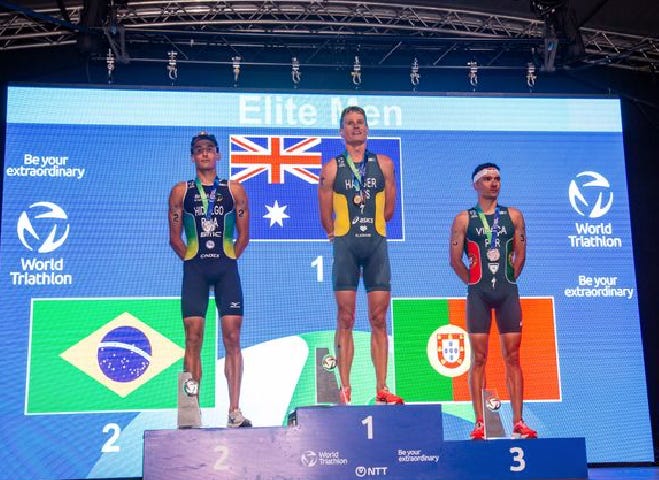
Wollongong -
Vasco Vilaça’s performance in the overall WTCS, culminating with his third place represented a positive outcome after knocking on the door of the series the last two races, and a step forward in consistency and racing at his best level at the grand final. For the JFTcrew squad, this performance contributed to the tally of 19 overall WTCS season podium performances, achieved across 8 different athletes since 2013. In a cheeky counter-point to the current thing in the endurance space, no lactate strips or lab testing formed part of these processes.
While there are pros and cons to World Triathlon’s format of a World Champion crowned across a series, vs a one day race, the strength of the series is the consistency required across 4-5 races or more - to be world champion requires such a high degree of performance delivery and decision making across the year, with many points where things could go wrong. With the depth of competition in World Triathlon competition, the series requires both process and outcome done at the highest levels. It’s been a privilege to see Vasco’s progression both in training and competition year on year since he joined the squad in 2021.
Wollongong swim course and swim dynamics - the last minute swim course change was significant, going from a relatively straight forward two lap out and back beach start course (although beach starts do make a bigger difference in the early density of the field) to a course with significantly more turns. This elevated the chance of breakaway packs on the bike, and we saw that in both the men’s and the women’s races. In short distance and in large fields in middle and long, the main difference between the times happens due to congestion at the corners, not the straight line swimming. We can see this also in the small fields seen in the T100 races, which generally are maximum 20 athletes, and result in much more compacted fields (smaller time differences), considering the longer distances. In speaking to former coached athlete Jelle Geens at one of the T100 races, he remarked how his swim times in the pool are more or less similar to the past, but now he is a ‘front pack swimmer’. No doubt the different dynamics of the smaller field size as well as less need / desire to work very hard to create small time gaps on the swim is part of those differences in how the swims play out.
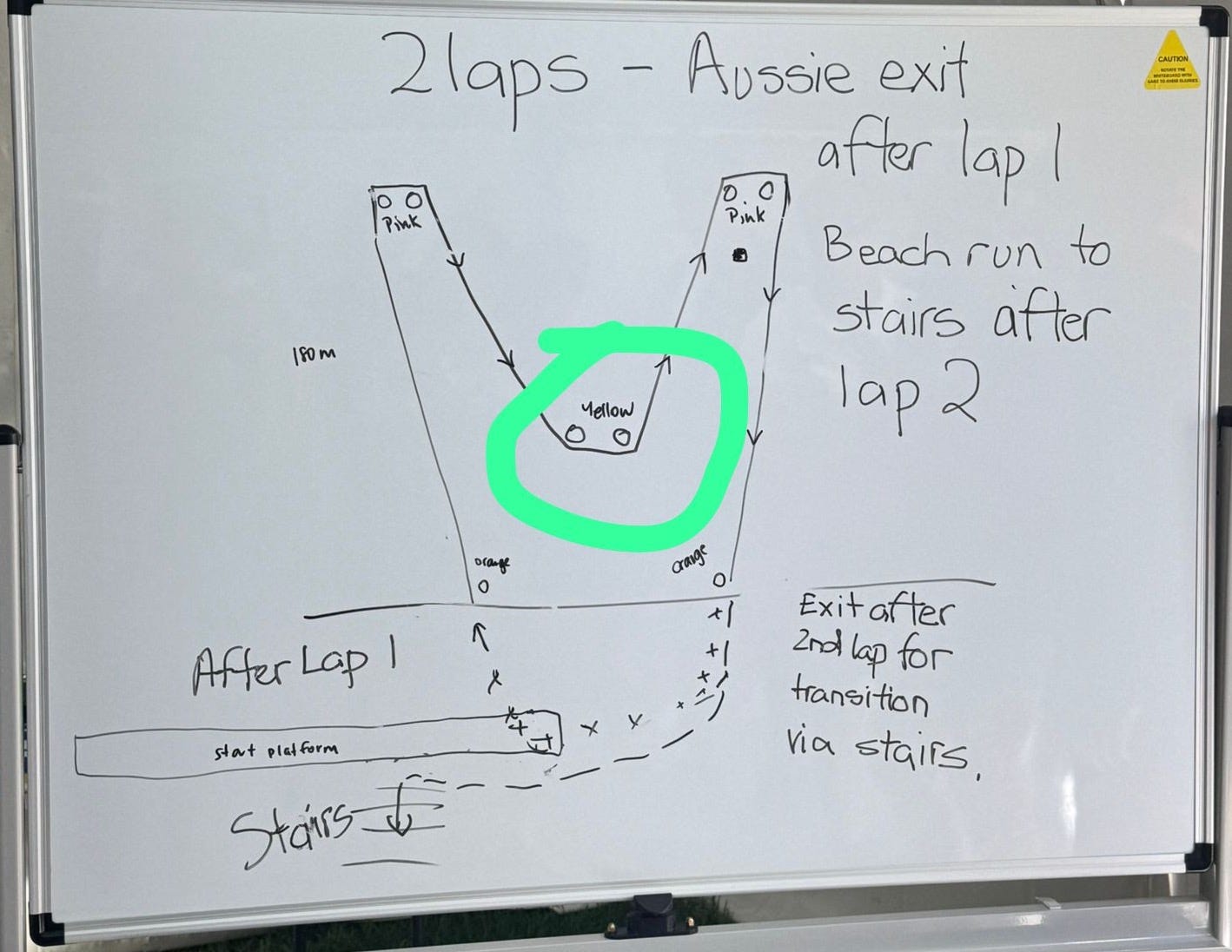
Of course the big talking point was the dropping out and back of two of the main favourites for the overall series in Beaugrand and Potter which was unusual and unexpected. A heuristic of championships performance is essentially that it’s less about peaking, than simply reproducing what you have done consistently before in racing, however obviously something went seriously wrong for these two favourites in Wollongong.
Long Sleeve suits in short course racing -
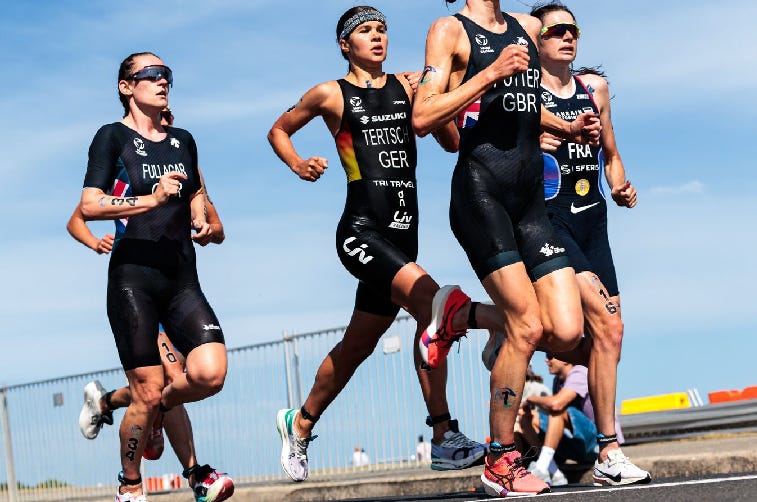
Early in 2025, World Triathlon announced that the racing suits now could include sleeves, as we see in middle and long distance racing. We know that the sleeves are likely better aerodynamically on the bike, provided they enable swimming performance required for success in short distance triathlon, through flexibility through the shoulders and hydrodynamics. We know also the longer legs a faster in the water (and likely on the bike), although not everyone uses the longer legs. Through the season we’ve been waiting to see which countries might develop their version of the short course racing suits with the sleeves, and the only integrated suit was from British Triathlon, with the Descent branded suit. Not all the British athletes opted for the suit as above. We also saw a couple of athletes use an undershirt base layer to create a long sleeved suit (this was facilitated by the wetsuit swim, so the two layers may not have impacted swimming hydro dynamics as much as it may in non-wetsuit swims). As many of the countries in WT racing are supplied by the same company in Zerod it remains to be seen how the WT suits evolve into the LA2028 cycle, as it represents an area for innovation that didn’t exist in short course racing.
Nice - at the men’s Ironman World Champs it was notable how close the lead group came off the bike together, meaning the challenging bike course didn’t significantly separate the main contenders (much the men’s 70.3 worlds), as well as the fast run times required to reach the podium. I would like the world champs have continued to be in different venues to see how different courses and environments may suit different athletes, but can understand the history of Kona is important to triathlon.
Kona - As with Wollongong, the main taking point was the stopping of two main favourites in Knibb very late in the run and Charles Barclay a bit earlier in the marathon. It’s a reminder that in the conditions in Kona, it’s primarily a race of self vs self, and individual pacing and self discipline are paramount. Hot years in Kona are particularly punishing both on race day in the lead up training for those preparing on the island.
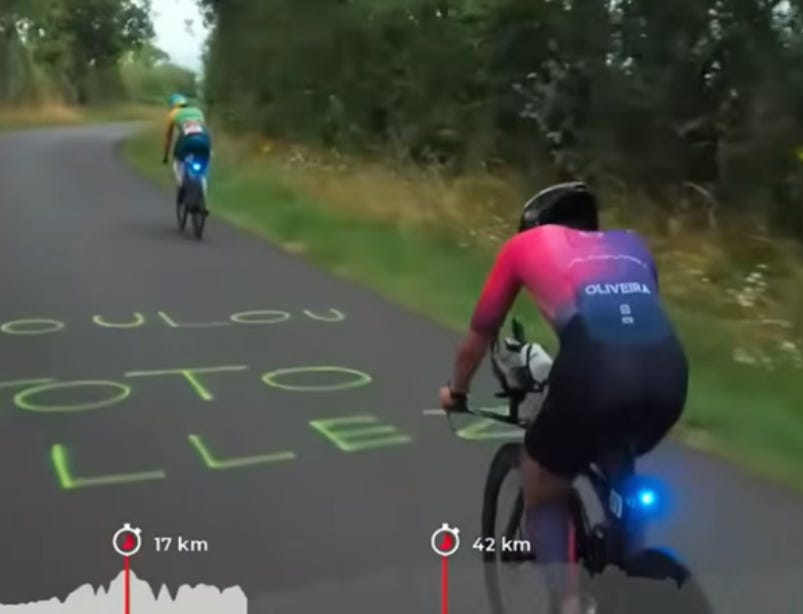
Toulouse - At the Super Tri final we see again the dynamics of close motos given the tight nature of the course and super tri racing, as well as team work (a significant percentage of the ST prize money is distributed by the team rankings), as well as the short chutes (not a fan of these, and the distortion they have on the racing). In 2025 fewer of the main contenders from the WTCS also raced the full Super Tri series, perhaps mainly due to scheduling conflicts, and the resulting opportunity costs. It looks like for 2026 there are changes coming to the format of the calendar, so it remains to be seen where ST goes from here, and how the teams will play a role or not in the new formats.
Qatar - At the T100 Grand final we didn’t have too many surprises performance wise, but the environmental conditions and the time of the year being so late, make preparing for this race challenging. It was a very long season for many of the athletes and the preparation requirements in terms of periodisation and specific training make this one a tough one to get right. It looks like Qatar will retain the T100 final for the next couple of years, so I’m sure some athletes will be looking to refine their preparation after the experiences of this season.
Race Ranger
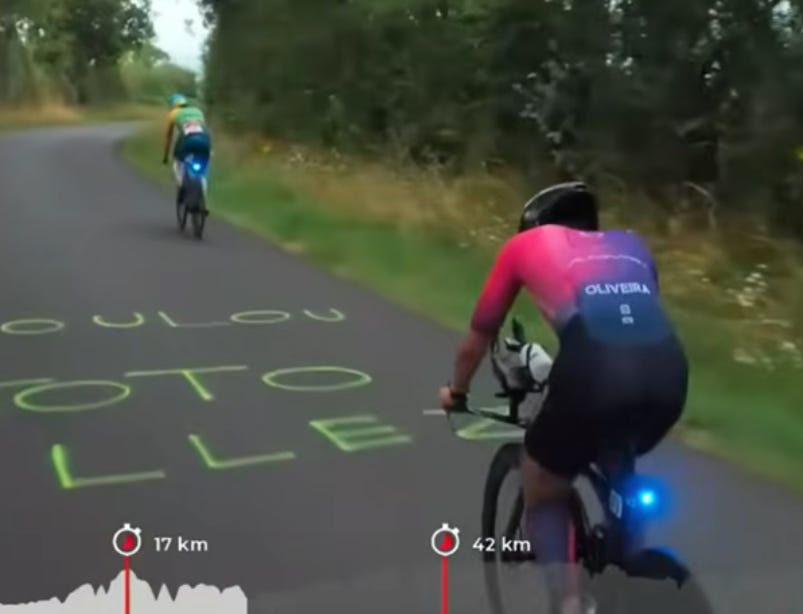
It’s been interesting to see the public data from the Race Ranger system in 2025, starting from Roth. Despite the interpretation of some internet commentators, there appears to be relatively little drafting time over the course of the races where specific athlete data has been released. With 1-4 minutes of draft zone timing being common over the course of a 1hr40-2hrs bike in the T100 races, and similar scaling up to full distances. It’s relatively a low percentage of time, and unlikely in itself to be a significant influence on the results. Considering the public data has led to some individual criticisms and pile-ons, we would hope the accuracy of the devices is good - although Ultra Wide Band technology is reportedly very good, it has to be tricky with two moving objects at speed, and no doubt the race ranger team has worked hard to get the device accurate in their testing.
Two quick reflections from reviewing the data - the data is not raw data, but edited to remove parts of the course such as some hills, corners, out of and into transitions, for example, where drifting into the draft zone may be unavoidable. I’d prefer just raw data as any editing that could introduce bias. From watching each race, it appears for example there have been ‘slot in’s which haven’t then shown up in the data from the race. Raw data would also highlight how the density of the competitors affects drafting time, even on some areas of the course where it may be unavoidable.
On the dialogue around 12m vs 20m of course 20m has less legal draft impact, so can be a good change, however the field size should then be reduced in order to reduce congestion on the course. Going back to 70.3 Worlds in Marbella, with the density of athletes coming out of the water, there not enough space on the road to spread all the athletes out early in the ride. Smaller fields would help reduce that congestion, as we see with the T100 races. Often the 12m vs 20m discussion feels like an ego contest - when in reality the best athletes are strong across all three disciplines, and the ‘best biker’ can only be decided at the finish line of the race, not simply by position off the bike. There are plenty of ‘bikers’ who simply over-bike and don’t run as well as they could have otherwise as a result. And likewise many of the better runners have figured out the bike pacing that allows them to express their best run out on the course.
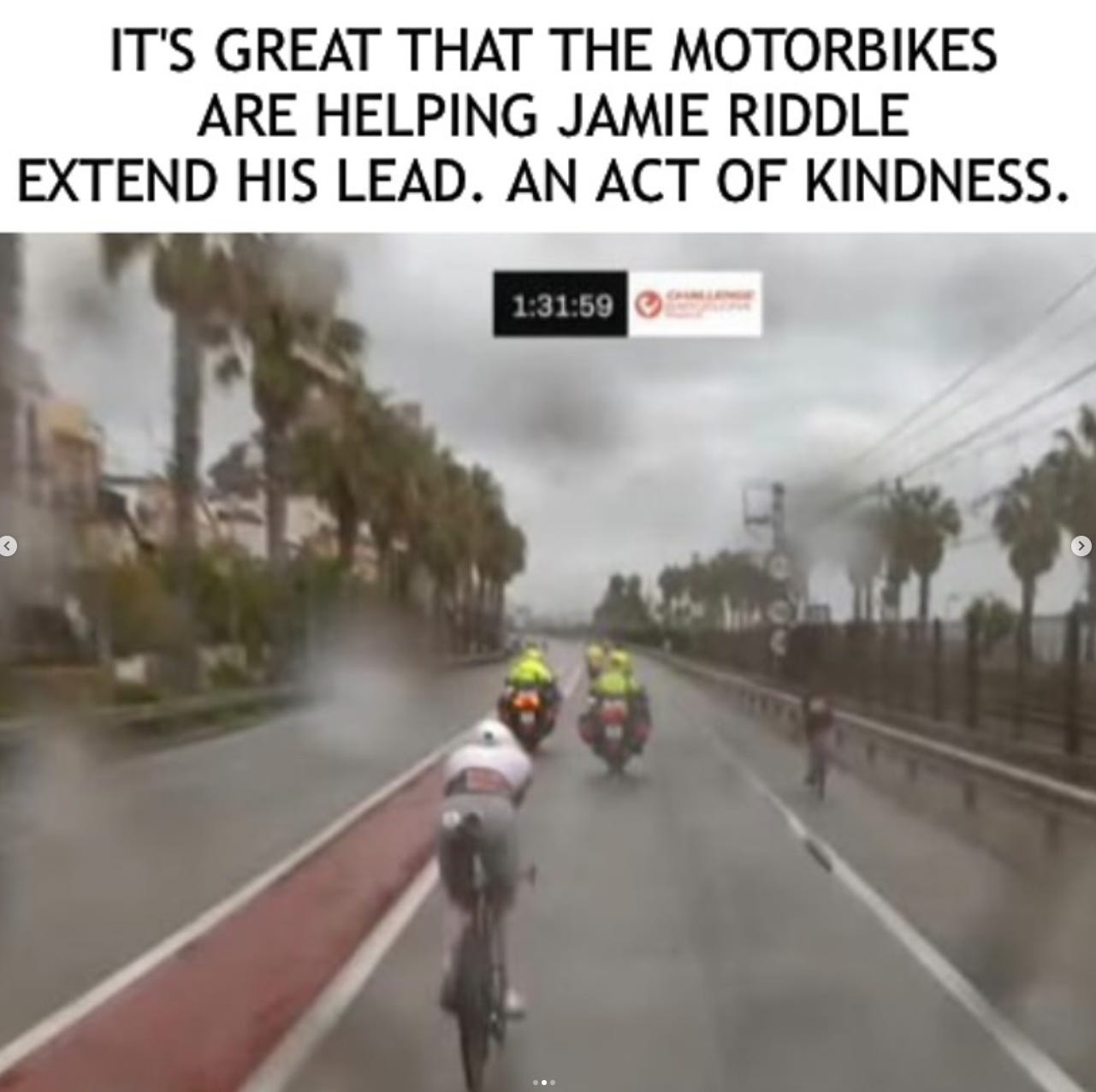
The other main reflection is that the real issue across triathlon (and cycling for that matter), is not necessarily the athlete-athlete drafting (regardless of 12 vs 20m), as we can see from the data, but the impact that moto drafting is having on races. A positive next step would be to figure out how to get race rangers on all the motos. Motos influencing in races can be significant and any time you are watching a head video view on the bike you may be seeing that happen, even when from the side depending on the wind, as well as when motos pass through groups and go from the side to the front repeatedly. It’s possible that the moto drafting data would be far more significant than the athlete-athlete drafting data, but it would be good to see if that assumption is correct. Of course athletes themselves can’t control the position of the motos, and yet making that data available would shed light on the potential impact that motos are having on races.
Coaching and more
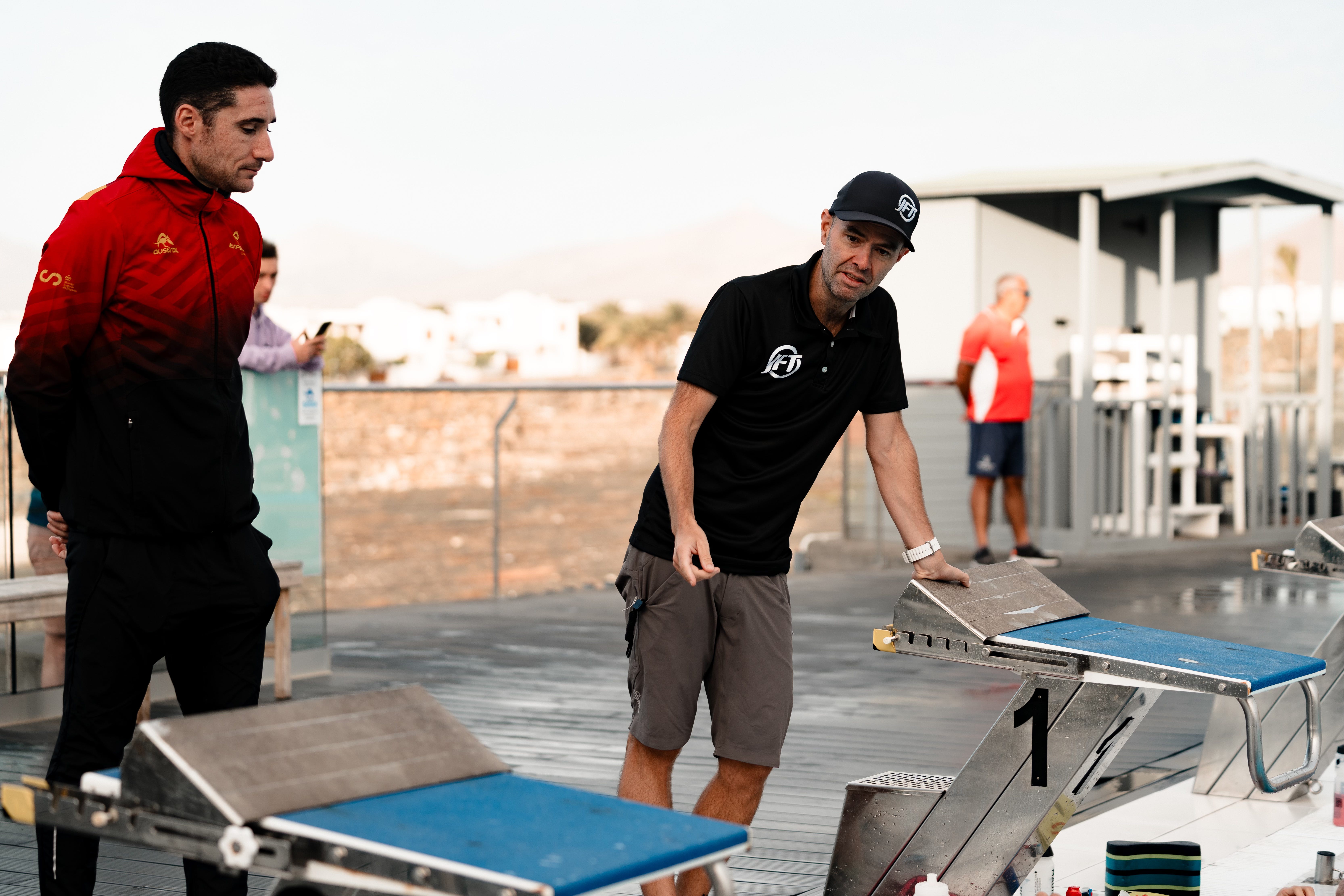
Coaching - ideal candidates for personal coaching are highly ambitious and experienced athletes who are looking to seek the best possible guidance to improve their performances. Typically those are have gotten stuck, reached a performance plateau, or struggle to escape from injury or underperformances. Preparation for any format of triathlon is available.
Consulting - For those not ready or looking for full 1-1 coaching, a thorough consultation and review of your programming, periodisation or other topics that will help you solve problems and perform better is available.
Coach Mentorship - coaches can receive support, mentorship and guidance from Joel - coaches can benefit from coaching - a ‘second set of eyes’ on your coaching practice.
Email at coaching@joelfilliol.com or my visit my website at joelfilliol.com to inquire.
Such a great read thank you Joel. I love getting the insight from such a highly regarded and experienced coach like you. Thanks for sharing!
This was a great read. Thanks for putting it together for us.