
Relentlessly Obsessed: What I learned from Simon Whitfield
Insights from the career of triathlon's first Olympic Champion

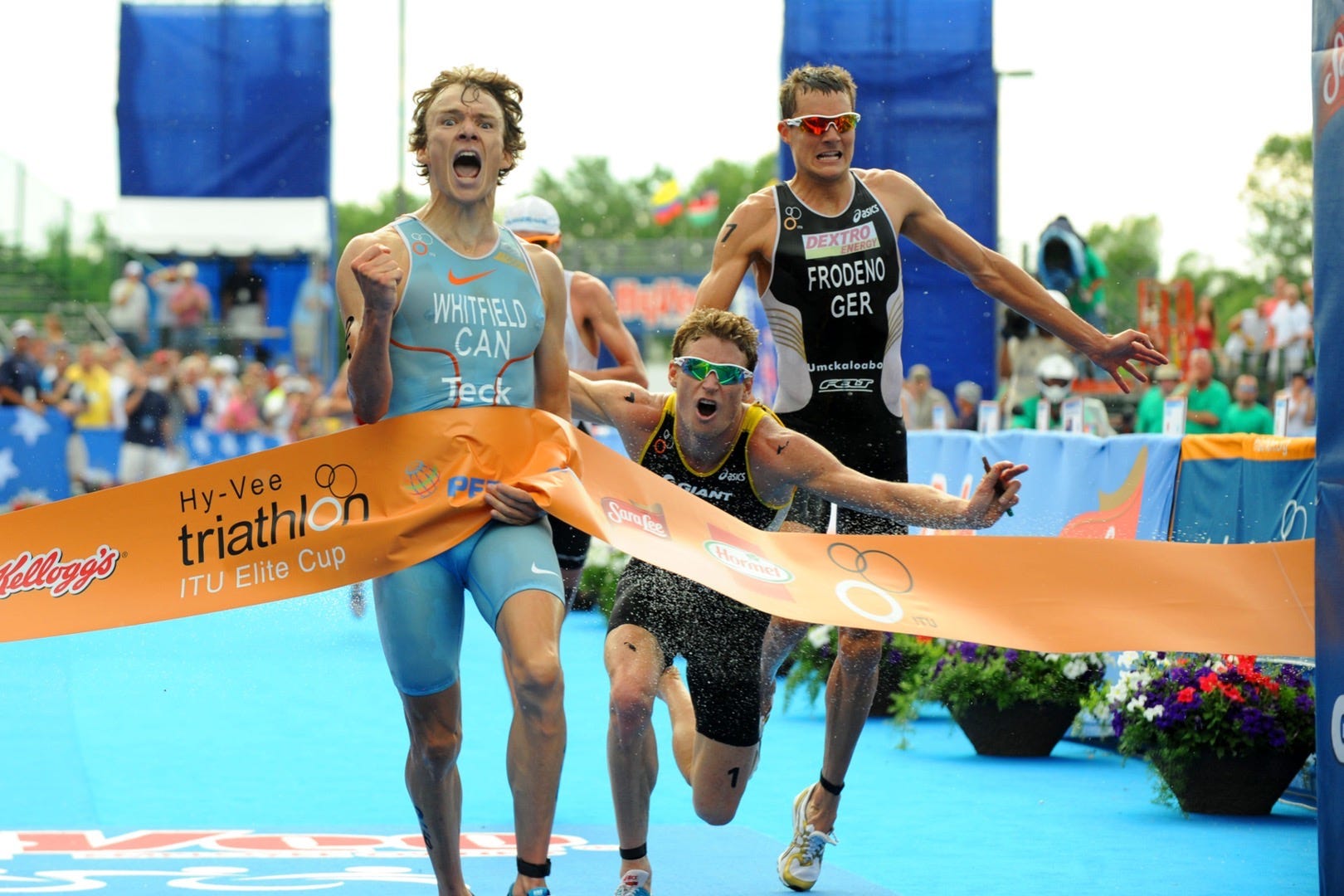
This article is adapted from a talk I gave at INSEP in Paris in 2015. I’ve found revisiting these reflections valuable as a coach. I still come back to these experiences to inform the work I’m doing now in my coaching and with the JFTcrew squad. These insights from Simon had the biggest impact on my coaching journey, and that influence is one that continues to have an impact today.
The TL;DR of these key reflections on what made Simon great:
His unique psychology: Who he was as an athlete, and the traits that made him capable of this kind of career.
His environment: The climate he created around himself, and how he managed it.
His preparation: The approach to training that kept him fresh and available across more than a decade.
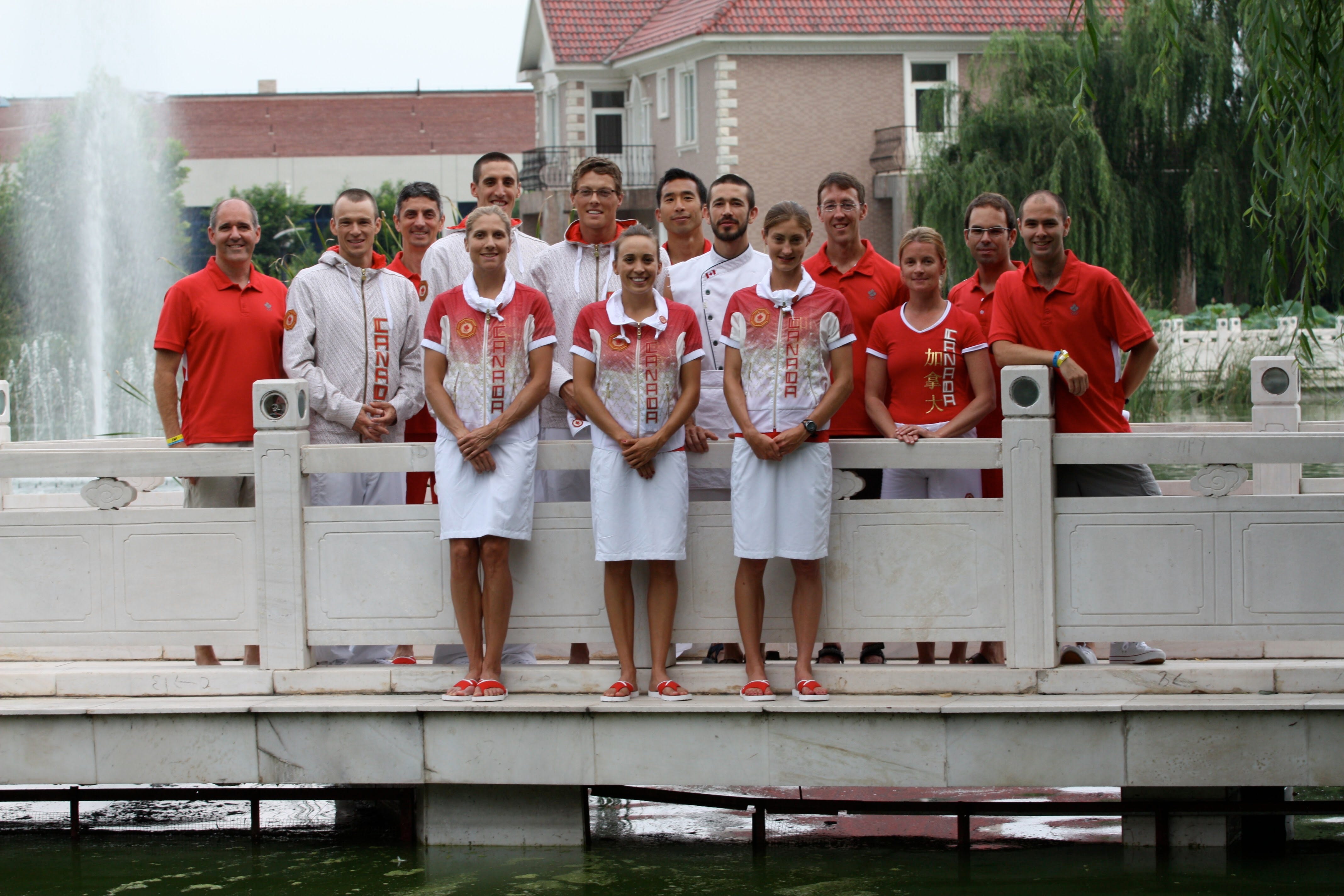
I first got to know Simon Whitfield as a junior athlete and training partner — I briefly trained along side him as juniors, in Collingwood Ontario, before I became a coach. From there over the years our relationship evolved, as I moved into a apprentice coaching role in Victoria British Columbia in 2001, at the National Training Centre after Simon won in Sydney the year before. Then after Athens 2004, Simon was looking to make a change into the next Olympic cycle towards Beijing, and I was in the right place at the right time to support him in his next chapter. So I had the unique experience of watching his entire career from the inside, first as a peer, then as someone with a responsibility to help him perform, and then again as an observer into his fourth Olympic Games in London.
When I was asked to present on this topic at INSEP, I went back to Simon himself. We sat down for several hours, went through a long list of questions, and I recorded the conversation for the Real Coaching podcast, and you can listen back here. This article is my attempt to distil what I took from those reflections, and what I think any coach or athlete can learn from it.
Before going further, I want to acknowledge some of the coaches and people who contributed to Simon’s career: Barrie Shepley, who has been a builder of triathlon in Canada since the very beginning and was there as a Canadian team coach for Sydney; Lance Watson, the gold medal coach from Sydney who stayed involved through Athens and into Beijing; Paulo Sousa, who came in after Beijing; and Jon Brown. All of them played a role through Simon’s career, and they all contributed to these insights that formed my presentation and this article.
A Consistent Performer
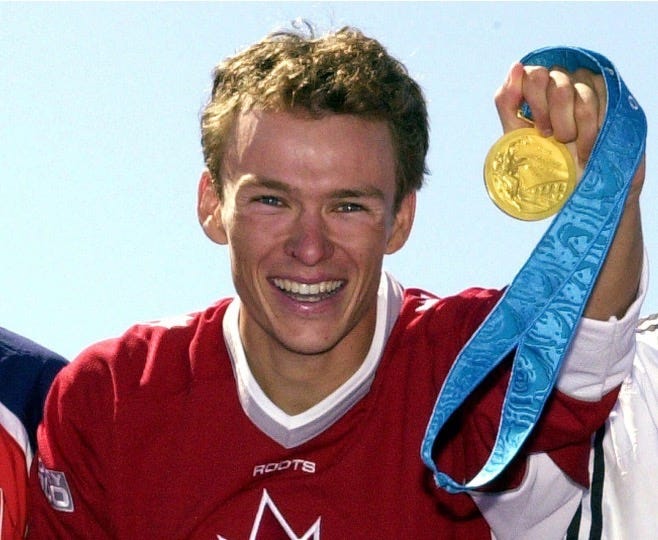
When people talk about Simon Whitfield’s career, they usually reflect back to the Sydney Olympics, where Simon became the first Olympic Champion in triathlon. Or returning to his second Olympic medal performance in Beijing, 8 years later. But I think the more interesting story is his whole career arc.
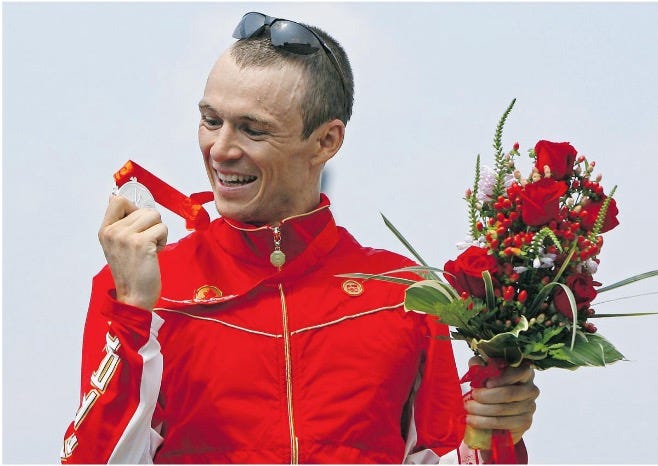
Here’s what a senior international career spanning from 1995 to 2012 looked like: Olympic gold in Sydney, 11th in Athens, silver in Beijing, and a fourth Games in London. Two Olympic medals — at the time, one of the very few athletes to achieve that in triathlon (before the introduction of the mixed team relay in 2020), Commonwealth Games gold in Manchester in 2002. Sixteen World Cup podiums over a ten-year span. Top-eight finishes at World Championships four times.
When you plot the results out on a graph, what you see is a remarkable line of podium performances sitting consistently above where most athletes’ careers ever reach. Athens was the dip compared to Sydney. And even then, he came back to the top again into Beijing.
That’s what I mean by consistency. Not perfection — but a sustained ability to operate at the highest level, across a long period of time, through different environments, coaches, training partners, different competitive eras, and the changing demands of the sport.
The Three Things That Made It Possible
When Simon and I went back through the career together, we landed on three factors that I believe explained his consistency over his career. I want to be clear about the order, because it matters:
First: Psychology. Who he was as an athlete, and the traits that made him capable of this kind of career.
Second: Environment. The climate he created around himself, and how he managed it.
Third: Preparation. The approach to training that kept him fresh and available across more than a decade.
1. Psychology: The Big Event Racer
The first thing to understand about Simon — and he’d say this himself — is that he was a big event racer. Olympic Games, World Championships, major stage — he got up for it for the challenge of these big goals.
That sounds obvious. But it isn’t. I can think of athletes I’ve worked with, otherwise talented, hard-working athletes, for whom competition generates at times significant fear. The bigger the stage, the more it weighs on them. And there are others who are somewhere in the middle: they love racing, they do well, but they don’t get the extra from big moments. Simon was the third type. The kind that the magnitude of the event genuinely energised him. That drove him through his career, and I think it’s important to name it explicitly, because you need to recognise where on that continuum your athletes sit.
Simon broke his collarbone in a bike crash in March 2002. That’s March. The Commonwealth Games in Manchester were in July-August. Not a long time.
What I remember from that period is seeing him on pool deck, riding his bike on the trainer, while everyone else was swimming. Doing whatever he possibly could to keep moving forward, to not get down, to not lose momentum toward his goal of competing in Manchester. He came back from that injury, got to the start line, and won gold in Manchester. For a lot of athletes, there’s no way they’re getting to that start line. No way they’re winning it. He did both.
His confidence was exceptional — and I’d call it ego in the most functional sense of the word. He was willing to put himself in the right place to win. That might sound simple, but I see a reluctance to do that all the time in athletes I work with now. They have the skills, they have the fitness, but at the critical moment they don’t pull the trigger. Simon never had that hesitation, particularly in the early part of his career. He had extraordinary finishing speed — I’ve never come across another athlete with as much raw speed as Simon — and he trusted it enough to put himself in position to use it.
His racing intelligence was something else again. He used a phrase I’ve never forgotten: for him, he could see races unfold in a kind of slow motion. So many athletes describe the opposite — races happen to them, they’re like deer in the headlights, they don’t see anything. Simon always knew exactly where he was in the swim, who was around him, what position he needed to be in. He could read the race in real time. And that came from being a genuine student of the sport — studying races, watching video, understanding tactics.
He actually gave me the word “gamification” for this. He saw preparation and racing as a game to be decoded. He studied what cycling teams were doing with power meters (in the early days of training and racing with power). He looked at swimming technical models. He gathered inputs from sports scientists and support staff. He was always curious, always learning. I think this is something that gets lost for a lot of individual sport athletes — they train, they race, they recover, but they don’t study. They’re in their own bubble. Simon never let that happen. While this sounds more commonplace now, in the early days of triathlon, this approach was not the norm, and even now takes great skill to manage as an athlete.
One more thing on psychology: he never lost sight of his process. There was actually only one time I can remember where we let ourselves get distracted from it — before the World Championships in 2006, we put a countdown clock to the race on the wall. And I regretted it. It created this external pressure that was pulling attention away from what needed to happen today, this week, right now. After that, he went back to being fully in the process. The joy was in the daily work, not in counting down to the result.
The contrast between Athens and Beijing is the clearest expression of this. In Athens, something wasn’t right emotionally — the joy wasn’t fully there, and the result suffered. Beijing was the opposite. There was this new-found joy coming back into it, and he produced one of the great performances in triathlon history. He was off the back early in the run, fought his way back through the field, and made the move that got him to silver. Watching it again, the thing that strikes you is not the fitness — it’s the belief to make the move when it counted.
2. Self-Management and Environment
This is the trait I think is rarest, and the one I’ve seen the least since. Simon had a deep ownership of his environment. Not passive acceptance of whatever was around him — active, intentional management of it.
That meant his coaches, his support staff, his training partners, his relationship with the national federation. He would mobilise resources. He would attract training partners to Victoria from all over the world. At various times we had athletes coming in from everywhere because of who Simon was and the environment he’d built. He had an intuition about what he needed and he pursued it actively.
At the same time, he was genuinely coachable. He needed buy-in — you couldn’t just hand him a plan and tell him to go do it. If he didn’t really believe in what we were doing, you’d feel it eventually, sometimes much later, in a way that was much harder to manage. So the process of earning his engagement was real and necessary. But once he was on board, he was fully on board. He would send emails from his car asking about training details (before texting was a thing). He would actively seek out the sports support staff, look for new ideas, gather input. Not passive at all.
The other thing was just how driven he was. And how challenging that made him for everyone around him. The great champions are often not easy athletes to deal with. They’re demanding. They push back. They require more of everyone. I’ve heard this framed as a negative, but I’ve come to see it as exactly the opposite. That’s where the greatness comes from. Our job as coaches is to figure out how to manage those kinds of people — because those are where the champions are going to come from.
I had to learn this quickly. I went from being Simon’s training partner to being his coach in a relatively short space of time, and the challenge he placed on me forced me to grow. If I’d resisted that, I wouldn’t have lasted. But instead, it made me better, and it shaped my coaching career afterwards.
3. Preparation: Less Than You Think
This is the part that surprised even me when I went back and looked at the training logs.
Simon didn’t suffer many significant training-related injuries across his career. The physical resilience was high, but the bigger insight came when I went back through the actual training volumes.
In reflection, Simon only really trained at around 80% of his maximum capacity. If he was capable of 30 hours a week, he was typically doing around 24. In his best years — 2007 and 2008 — there were hardly any weeks over 25 hours. He was never someone who succeeded because of high volume. He succeeded in part because he didn’t put his body in a position where it broke down.
Earlier in my career I would have told you that to win at the highest level, you needed to do the most training, harder and better than the others. As I’ve grown a bit wiser, I’ve come to believe in what I call the minimum effective dose: enough stimulus to drive adaptation, not so much that you exceed your ability to recover. Even today, the JFTcrew squad doesn’t always train as much as some other athletes or groups — and I think the results over time speak for themselves. Simon was a living example of this before I even had the words for it.
Simon was also an extraordinary athlete in the pure movement sense — he could’ve competed at the highest level in multiple sports. That athleticism gave him a learning and skill acquisition advantage that’s very rare. And over time, he showed the courage to change. He worked with different coaches at different stages of his career. He reinvented his approach when the previous one stopped working. He knew, coming out of Beijing, that he needed to make a change if he was going to make London. And he did.
The Big Rocks Summary
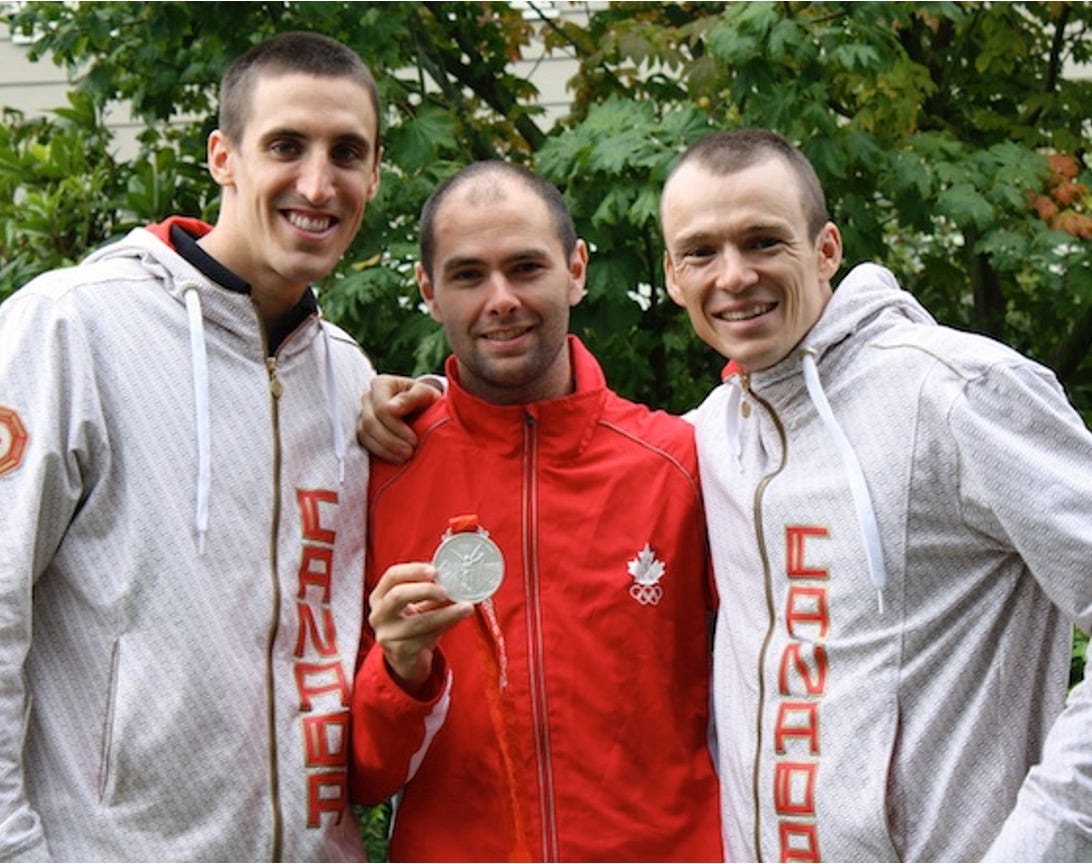
Three big principles come through from these reflections. Self-management: deep, active, all-encompassing ownership of everything that affected his performance. Racing and preparation intelligence: a real student of the sport, applied with precision when it counted. And consistent, progressive, varied preparation over a career that lasted more than fifteen years.
Even looking back now with more than 10 years since I initially put together these insights from Simon’s career, I’m struck by how relevant they remain today. These are the original ‘world class basics’, and they remain applicable to any current athlete wanting to achieve their best performances.
I’ll close with something I quoted in the presentation from a Canadian journalist writing about Beijing:
“This was a story of possibility. If we fund our athletes, if we are innovative, if we do not bow to the nattering chorus, if we are talented, and if we are brave enough to commit our whole selves to winning knowing how much more crushing it will be should we fail, then Canada can compete with anybody. Then Canada can win.”
- Bruce Arthur, National Post August 19, 2008
I think that last part is the one that stays with me. Committing fully, knowing it will hurt more if it doesn’t work out. That’s the price to get to the top and stay there over a long career. And it’s one Simon was always willing to pay. That full commitment to success is not as common as we might think. I frequently observe a fear of failure that results in a subtly lower commitment which reduces the chances of success. But that wasn’t Simon, and I’m grateful for it and the opportunity to learn from him.

Recent Updates:
Kaizen Endurance Podcast with Dave Schell: Unlocking Elite Performance, the Power of Patience, and Long Term Athlete Development with Joel Filliol
The Top 20 Rules for Faster Triathlon Swimming article + Podcast + Youtube video
Risk and Reward article + Podcast + YouTube video
Zone 1 is where the magic happens article + Podcast + Youtube video
One of my favourite presentations to this day Joel and remember it like it was yesterday. I've borrowed many of the concepts subsequently in my own teachings to athletes. You need to be a student of the sport. Thank you for sharing.