
Overthinking Makes You Slower
The athlete who reads everything, questions everything, and somehow keeps getting in their own way

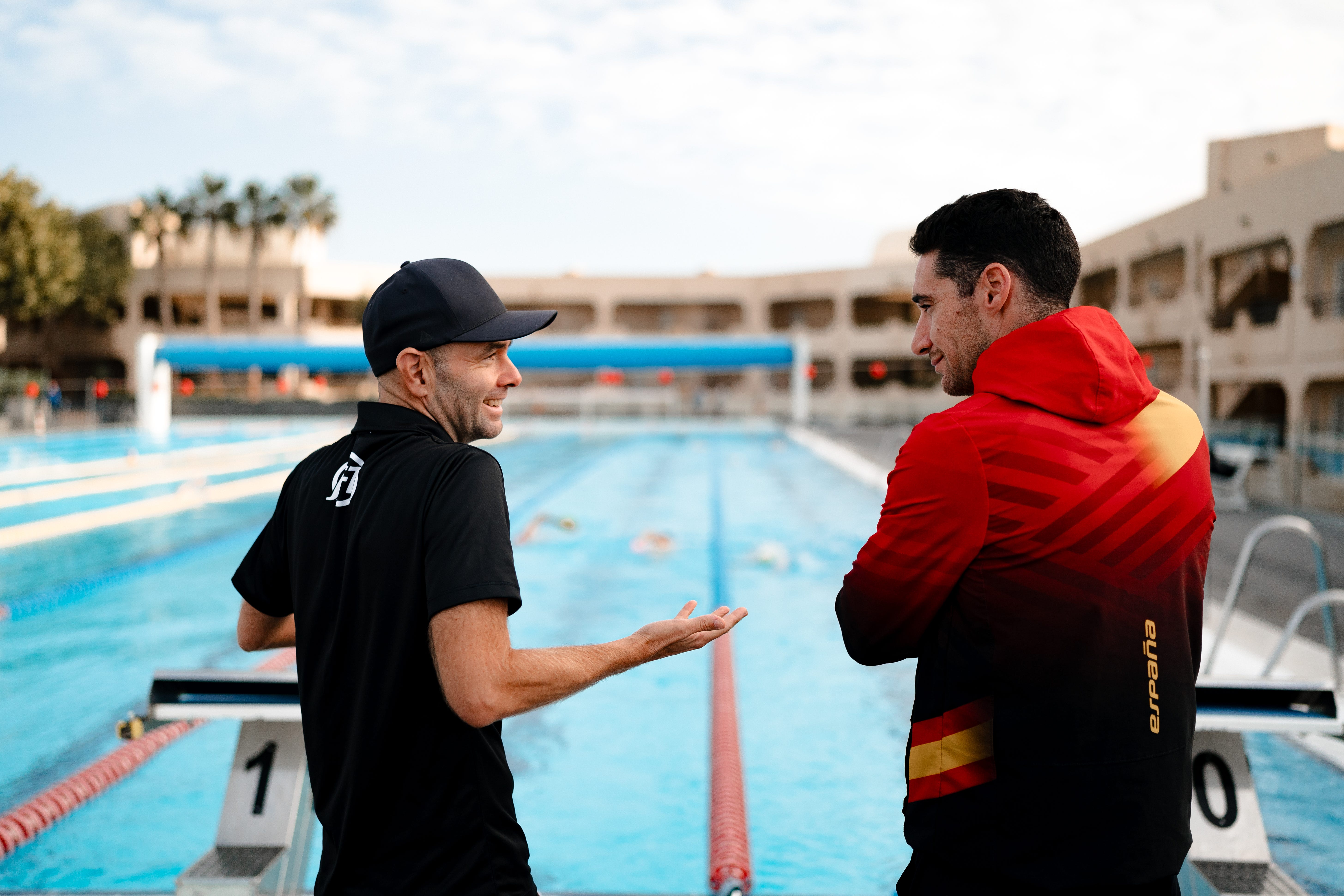
One of the biggest reasons why competitive and highly motivated athletes underperform when it comes to competitive goals is not about a lack of effort, or engagement in the day-to-day training process. It’s not because they are not working hard enough (in fact it’s often the opposite, working too hard in the short term).
Instead, their underperformance often has its origin in a kind of subtle self-sabotage that comes from thinking too much about what they are doing and what they are not doing - they are struggling to “Trust the Process” - a cliche because it’s true.
There has been a huge proliferation of information about training, performance, sports science research, various methodologies, and what everyone else seems to be doing. This has resulted in athletes for whom finding and sticking to a clear narrative of performance improvement and process has become lost is in a cloud of all the options that might be available to improve performance, but without the wisdom to know what is the right methodology for this moment based on where they are coming from and where they are going.
“Everything” works, but everything can’t be done at once. There are trade-offs and unintended consequences to mixing too many approaches at the same time.
There’s also another cost: when your process is more complicated, it becomes very hard to see what’s actually working. That clarity is one of the most underrated benefits of keeping things simple.
When Iñaki de la Parra asked me recently what separates champions from talented athletes, I found myself coming back to one answer more than any other: the ability to protect attention:
Champions have a clear sense of what’s directly relevant to their performance, and what’s simply interesting, and they treat that difference as important. The modern world will always offer talented athletes a thousand things to engage with. Champions engage with far fewer of them, and instead do the fundamentals at the highest level.
That difference: What is relevant for their current context (“It’s the context, not the content”), versus what might be interesting to do, but not do right now, is a key skill needed in this environment. In our current world that is built to maximise our engagement with everything, deciding what not to think about, and what not to try to do is one of the hardest things an athlete (and coaches) can do.
We underestimate what the information environment costs us.
When Iñaki asked what fundamentals athletes try to skip, one of my answers was attention itself:
“We all have only so much bandwidth and attention — we don’t often consider the opportunity costs of where we put that attention and focus.”
Our attention bandwidth is finite. Every decision consumes some of it. Every new protocol you read about, every Garmin recommendation you second-guess, every Instagram or training post that makes you wonder if your approach is wrong - these are not neutral inputs. They draw from the same pool that powers good decision-making in training, in racing, in recovery.
Overthinking depletes your decision making power, as much as it distracts from having a clear focus.
What overthinking actually looks like in practice
When I described the most common self-sabotage patterns, novelty-seeking was near the top: the distraction of the latest product, tool, or methodology pulling focus away from doing the basics well. Social media makes this worse. As I put it: “Many athletes become too connected and worried about what others appear to be doing.”
Strava-noia. You see someone posting monster training sessions and start questioning why your own sessions don’t seem as epic. You see a method everyone else seems to be doing and wonder if you’ve been wasting months not doing the same thing./ You get unsolicited advice on your running form from someone you’ve never met, and even if you know better, the thought is already in — should I be doing something different?
Even the most experienced athletes aren’t immune to it. And what gets posted is rarely the whole picture - it’s a version edited for effect.
The data explosion has made this worse. We can now generate more information about our training than we can meaningfully use. Wearables measure everything - with questionable accuracy in many cases. Platforms turn that data into scores and recommendations. The result is athletes watching numbers instead of learning to read themselves. Unable to slow down because the number says otherwise. Or convinced their training isn’t good enough because it doesn’t match what someone else posted — or what they themselves once did, in a moment that may have been the exception rather than the rule.
Complexity has become a product
In that same interview, I touched on my this may be happening:
“Complexity has become a product in itself. There’s a commercial sense to making simple things complicated. If training feels technical and difficult to navigate without specialist tools and expert guidance, there’s a market to serve.”
Overthinking doesn’t just happen, it’s cultivated by the information environment, and that environment profits from it. Every new device, every performance metric, every influencer post about a novel training method is — whatever else it is — an invitation to over-analyse what you’re doing. To wonder if you’re missing something. To think more about other options that might improve your performance.
Most of the time, the answer is not to think more. It’s to do the work you’ve already decided to do, and do that consistently over long periods of time (think months and years, not single sessions or big weeks).
The deeper problem: decisions made daily vs. decisions made once
One of the most underrated things a good coach does is reduce decision fatigue. I’ve said this in various ways across my career but it came up clearly in the Iñaki conversation: part of the job is shouldering decisions so the athlete doesn’t have to carry them. The fewer daily choices an athlete has to make about their training, the more cognitive and emotional energy remains for training itself.
The athletes I’ve seen manage this best aren’t the ones who have answered every question. They’re the ones who’ve decided, once, which questions they’re going to take seriously, and are filtering out the rest of the options. They build a process they trust, and they protect it to do the work necessary to create real performance changes.
That’s different from stubbornness or inflexibility. It’s a deliberate choice about where attention goes. And it’s a choice you have to make repeatedly, because the noise doesn’t stop.
What Actually Matters
Overthinking tends to feel like what the best performers do: ‘leaving no stone unturned’. The mind-set that you’re leaving nothing to chance. But in sport, the athlete who can commit to a process long enough for it to work will almost always outperform the athlete who keeps optimising. Constant recalibration prevents the depth of adaptation that only comes from consistency over time.
The question to ask is not: am I doing everything I could be doing?
The question is: am I doing the things that actually matter, consistently, without letting everything else get in the way?
For most athletes and coaches reading this, you probably already know what those things are. You don’t need more information. You need more focus and clarity on the fundamentals. You need less interference with what you already know.
Execute the basics, the fundamentals, consistently over time. You don’t need the latest gadget to do that - deliver what is needed on the day by learning to be in tune with yourself, make good decisions daily and repeat that process.
Finding simplicity, and delivering it consistently, is harder than sampling everything that might help. It doesn’t get easier as you improve. It requires a stronger filter. Learning what to ignore is a skill.

This piece draws on themes from my interview with Iñaki de la Parra for MAD Science Meets Real Life, and from 30 years of watching talented athletes get in their own way — including, at times, myself - links below:


So true!
That is one of the best articles on training advice that I've ever read. But then again your interview with Iniaki was also masedr class. Thank you! Not tooting my own horn but much of what you say is how I try to "program" my athletes to think and act. In addition I feel that your advice is also very applicable to us coaches. We can also easily sit in front of a computer and beat ourselves to death with charts and graphs versus using our intuition that we've built up over years. 🙏