
5 Principles That Survive Time
The training truths that hold up across juniors, elites, and masters

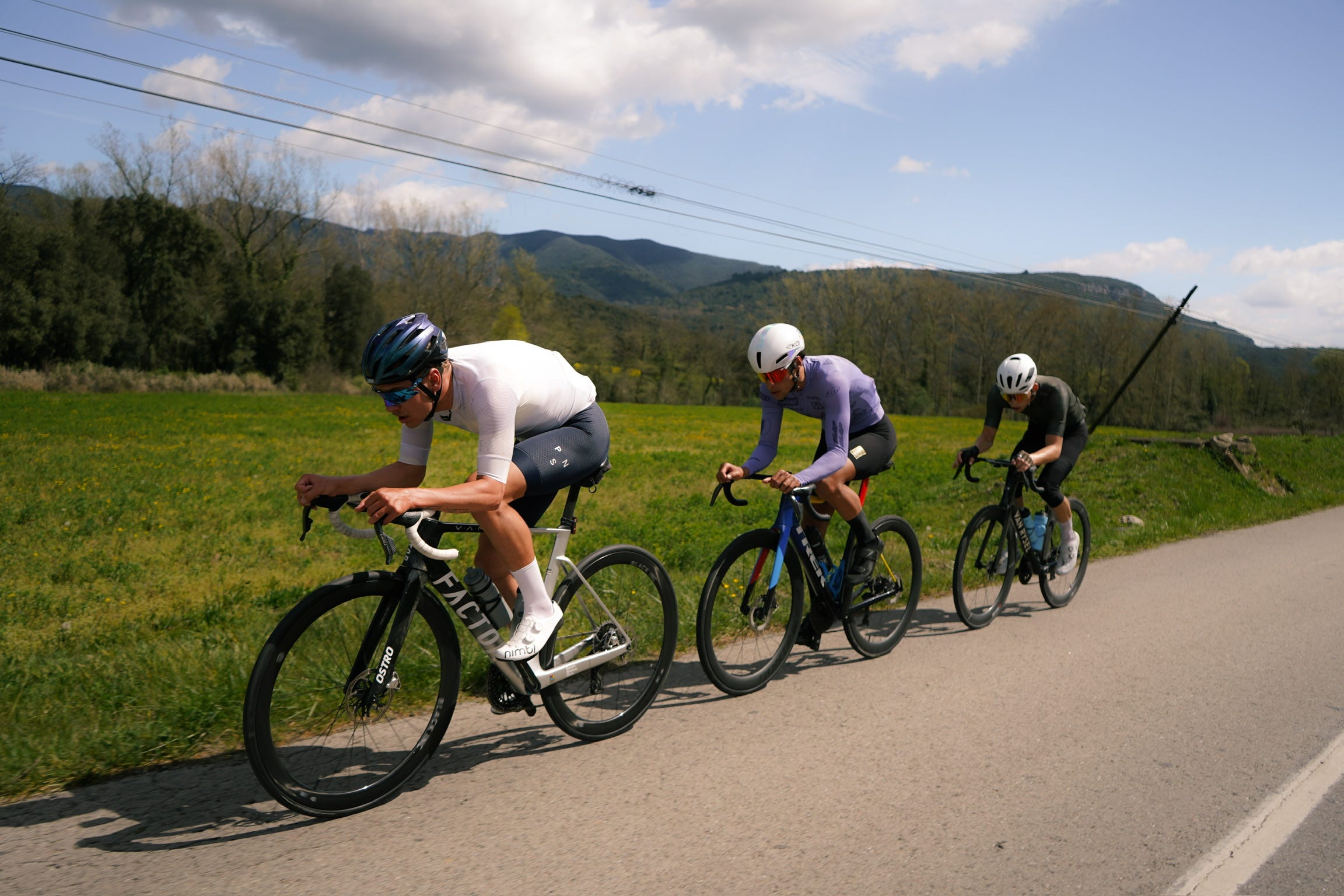
I recently sat down with Iñaki de la Parra for a long conversation about coaching, athlete development, and what actually works in endurance sport. One section of our interview focused on principles - the things that hold true regardless of whether you’re coaching a 14-year-old junior, a professional triathlete, or a 55-year-old age grouper chasing a Kona slot.
These aren’t new ideas, but concepts that have held true for me over time.
Here are the five principles I keep coming back to, and what they actually look like in practice.
1. Deep aerobic conditioning trumps everything else
Superior aerobic fitness doesn’t just make you faster. It creates options. It gives you the capacity to absorb training load, recover from mistakes, and come back from setbacks. Athletes with a real aerobic base have margin for error. Athletes without it are often one bad week away from falling apart.
This isn’t about doing more easy running or grinding out base miles for the sake of it. It’s about understanding that aerobic development is the foundation everything else sits on. When athletes skip it or rush the process of building a deep base, they can still perform at a certain level — but they hit a ceiling, and the stop progressing.
In practice: Regularly arriving at hard sessions already tired is the sign that the fundamentals are not strong enough. Most athletes interpret that as needing to push through. The better read is that your aerobic base isn’t developed enough to support the load you’re trying to carry. The fix isn’t mental toughness. It’s building the engine first. Dial back the intensity, add the easy volume, and give it time. Not weeks. Months, and sometimes years.
2. Consistency through progressive load beats the mega days
The best average load across months years beats any single peak effort. Backing it up day after day, week after week. That’s what actually moves the needle on performance development.
This sounds obvious but many don’t actually train with this principle in mind. The pull toward the big days is strong. It feels like progress. You go long, you go hard, you feel wrecked after, and it seems like you did something meaningful. Sometimes you did. But if that session compromises the next three days of training, you didn’t come out ahead.
The real metric isn’t what your biggest day looks like. It’s what your training looks like on a random Wednesday in March when you are just ticking along consistently. That’s where development shows up - building progressively over time.
In practice: Stop optimising for your best week and start optimising for your sustainable week. What’s the training load you can repeat, week in and week out, without digging yourself into a hole? Start there. Then build it slowly. A 5% increase in consistent weekly volume over a year compounds into something significant. A heroic training block followed by two weeks of recovery doesn’t elevate performance in the long term.
3. Training to train comes before training to race
It takes real time to learn how to absorb meaningful aerobic load. Before you can chase performance optimisations, you need to build the capacity to train in the first place: the ability to handle frequency, volume, and repetition without breaking down.
I see a lot of athletes and coaches jumping straight to the marginal gains phase. Heart rate variability monitoring, heat adaptation protocols, lactate testing, periodisation models - all can be useful but only if we remain focused on the fundamentals. We need the athlete to build the base to absorb training in the first place. The 1% optimisations are only worth chasing once the 99% is solid, and the truth is that very few athletes reach that stage.
Skipping this step is one of the most common and costly mistakes I see. It’s tempting because the sophisticated approach looks like high performance. But it’s not high performance. It’s the appearance of high performance.
In practice: Ask yourself honestly: can you handle training five or six days a week without constantly getting sick, injured, or burned out? Can you string together consistent weeks across a full season? An honest no to either question is where the work starts. Get the frequency and volume manageable first. Learn how your body responds to load. That foundation is what makes everything else actually work.
4. The right load at the right time for the individual
Never do today what will compromise the plan tomorrow.
We consistently underestimate the cost of what we do today on what comes next. Not just the next workout. The next week, the next month. Training stress accumulates, and recovery doesn’t happen on a tidy schedule. The decision that feels fine in the moment often has a price that shows up later.
This is one of the harder coaching skills to develop because it requires you to zoom out. It also requires honesty. Athletes want to train hard. Coaches want athletes to perform. The pressure to do more is always there. The wisdom is in knowing when less is actually more.
In practice: Before any session, the question isn’t just “can I handle this today?” It’s “will doing this today compromise tomorrow, or this week, or next week?” A session that leaves you so depleted you can’t train well for two days after wasn’t the right call. This is especially relevant for anyone managing life stress alongside training — work pressure, poor sleep, travel, illness circulating. Those aren’t separate from training stress. They all pull from the same recovery pool.
5. Performance improvements mainly come from iteration, not innovation
Endurance sport is fundamentally simple. The gains come from doing the right things consistently over a long period of time — not from finding the next breakthrough protocol or the next piece of technology.
The industry has a strong incentive to sell complexity. New training methodologies, new devices, new supplements. There’s always something new claiming to change everything. Some of it genuinely helps at the margins. But the core of what produces elite endurance performance hasn’t changed much. The athletes who reach the top of the sport got there by doing the basics extremely well, for a very long time.
That’s less exciting to market. But it’s the truth.
In practice: Before adding anything new to your training approach, ask what you’re already doing consistently and whether it’s being executed well. Most athletes don’t need a new training system — they need to do their current system better, more often, for longer. The compound interest of doing simple things well over years is what produces real performance. Innovation has its place, but it’s not a shortcut to the work.
These principles aren’t complicated. They don’t require expensive tools or sophisticated monitoring. They require patience, consistency, and an honest read of where you actually are, not where you want to be.
That’s the hard part. And it’s why most people resist this mindset.
The good news is that the athletes who commit to this approach, who build the aerobic base, who back it up day after day, who learn how to train before they try to race, those athletes tend to keep improving long after others have plateaued. The fundamentals compound. That’s the whole point.
This piece draws on themes from my interview with Iñaki de la Parra for MAD Science Meets Real Life, and from 30 years of watching talented athletes get in their own way — including, at times, myself - links below:


Interesting article again and conflicts with the practice of many coaches and athletes to chase quick wins. It’s probably not a popular or easy to sell statement but training and adaptation needs time.